Do you know that changes in your eyesight can directly impact your posture and, subsequently, your musculoskeletal health?
When vision changes—whether due to an outdated prescription, eye strain, or even the physical fit of your glasses—the body compensates unconsciously. From a physiotherapy perspective, we often see these compensations manifest as repetitive strain in the neck and shoulders. When your eyes cannot find a clear focus, your spine moves to find it for them.
Common Compensatory Patterns
In clinical practice, I frequently observe how visual factors compound musculoskeletal issues:
- The Sliding Frame & Chin-Up Tilt: A very common issue is a frame that is poorly fitted and slides down the nose easily. To see through the lens clearly, the wearer will unconsciously tilt their chin upwards. This places the upper cervical spine in prolonged extension, a frequent catalyst for tension headaches and neck pain.
- The “Owl Effect” & Neck Strain: Modern lenses often have a specific “clear corridor.” Instead of moving their eyes to see a second monitor, users often rotate their entire head to stay within that clear zone. This repetitive neck pivoting can lead to significant tension in the cervical spine and upper trapezius.
- The Forward Poke: If a screen is too dim or a prescription is outdated, the natural reaction is to “poke” the head forward to get closer to the stimulus, disrupting neutral spinal alignment and increasing the load on the mid-back.

Strategies for Visual & Physical Relief
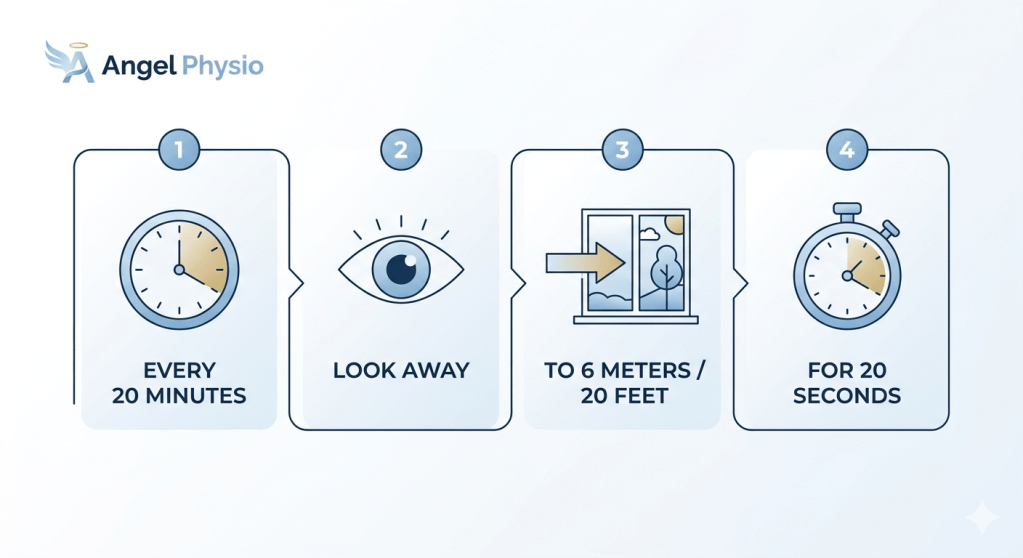
- The 20-20-20-6 Rule: To prevent both eye and neck fatigue, every 20 minutes, look at something 6 metres (about 20 feet) away for at least 20 seconds. This allows the ciliary muscles in the eyes to relax and serves as a crucial “micro-break” to reset your neck and shoulder posture.
- Ensure a Secure Fit: If your glasses constantly slide down, visit your optician for an adjustment. A secure fit prevents the need for the compensatory chin-up tilt.
- Minimise the “Owl Pivot”: If you use multiple screens, bring them closer together or use a “curved” setup. This minimises the degree of head rotation needed, protecting your neck from repetitive pivoting strain.
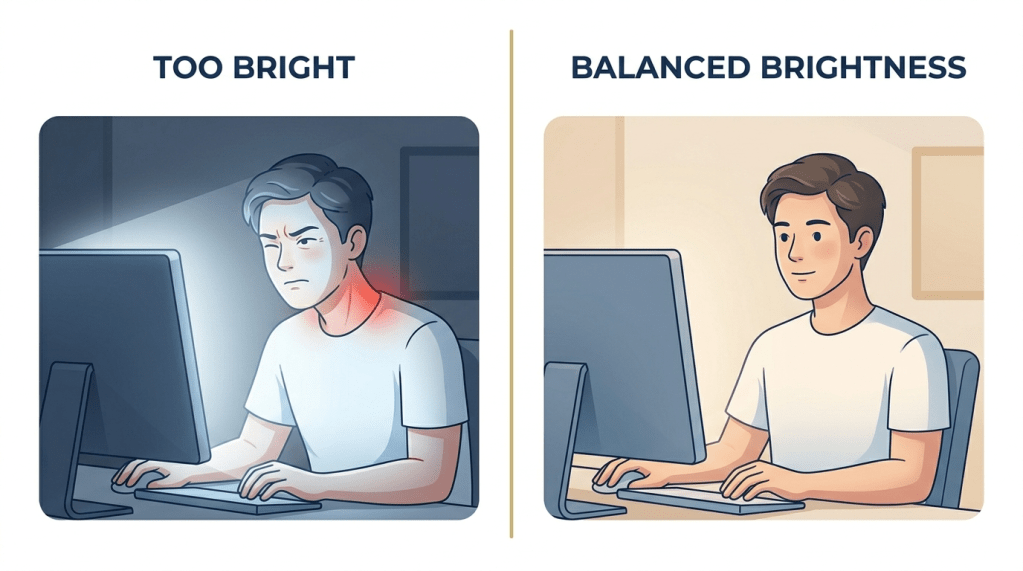
- Balance Your Brightness: Ensure your screen brightness matches your surrounding environment. A screen that is too bright causes squinting and facial tension, while a screen that is too dim encourages a forward-leaning posture.
While ergonomic adjustments can significantly reduce musculoskeletal strain, they are most effective when your visual correction is accurate and fits well. If you find yourself constantly adjusting your head position to see clearly, despite a proper ergonomic setup, it may be time for a professional visual assessment.
I always recommend consulting your optometrist or eye specialist for a comprehensive eye check and to ensure your frame is fitted correctly. This collaborative approach is often the missing piece in resolving persistent neck and shoulder issues.
By integrating visual health with ergonomic principles, you ensure that your environment supports your body’s alignment rather than working against it.

 Angel Physio
Leave a comment